%20%20-%20Menu.svg)






In this blog
TL;DR
Clothing accounts for 25% of online product returns, making apparel the most-returned ecommerce category globally, according to Statista.
-
Ecommerce return rates average 15%–30% by category, with fast-fashion segments reaching 40%–50%, compared to 8%–10% in physical retail.
-
Bracketing behavior: shoppers intentionally ordering multiple sizes to return unwanted items disproportionately affects fashion and footwear, particularly among shoppers aged 18–34.
-
Reverse logistics costs continue to rise due to transportation inflation and labor complexity, with total return-processing costs approaching double-digit percentages of the original item price, according to Bain & Company.
-
Consumer electronics return fraud, including component theft and wardrobing, is increasing globally according to NRF data, making per-unit return costs exceptionally damaging despite lower return volume.
-
Exchange-first return workflows retain revenue and reduce net return rates, outperforming automatic refund policies on both margin and customer lifetime value.
What Are the Most Returned Products Online in 2026?
Returns are no longer a rounding error; they determine margin, customer experience, and working capital health. As ecommerce volume scales, the most returned products online also concentrate costs. For online retailers, these costs range from repacking to resale markdowns and carbon impact. Understanding the return mix, common failure points, and channel differences helps operators tighten fit and quality signals, calibrate promises, and improve contribution margin per order.
Below, we unpack category-level data, benchmark ecommerce return rates, and convert them into practical actions for merchandising, product content, and reverse logistics design.
Most Returned Online Purchases by Category: 2026 Ranked List
According to the Statista Reports, the most returned products, by segment, are as follows:
| Category | Share of Consumers Returning | Primary Driver | Operator Response |
| Clothing | 25% | Fit/color variance | Size guidance, AR try-on, exchange-first |
| Shoes | 17% | Comfort/size | Half-size options, in-box fit guide |
| Accessories | 12% | Scale/finish expectations | Macro photos, dimensions, materials |
| Food & Beverage | 12% | Freshness/date misses | Lead-time control, insulated packs |
| Consumer electronics | 10% | Damage/spec mismatch | Drop-tests, accessory checklists |
| Cosmetics & Body Care | 9% | Shade/sensitivity | Shade finders, sample kits |
| Books/Media/Games | 9% | Damage/mis-ship | Better carton and QC |
| Furniture & Household | 8% | Damage/space fit | White-glove, protective packaging |
Ecommerce Return Rate Benchmarks That Matter in 2026
A useful baseline for operations and finance leaders:
| Benchmark | Year |
| The average e-commerce return rate mostly depends on the category | 2025 |
| Fashion and apparel have the highest return rates across all categories | 2025 |
| Free returns policies materially increase conversion, but also return volume | 2025 |
| Reverse logistics costs are rising due to transportation and labor inflation | 2025 |
| Return fraud accounts for a growing share of total returns labor | 2025 |
| Restocking, labor, and inventory depreciation significantly erode margins | 2025 |
Source: Statista | NRF | Deloitte | McKinsey | Bain & Company
Benchmark: Ecommerce return rates can exceed 20% in high-risk categories like fashion, compared to approximately 8–10% in physical retail.
Channel split still matters: a single online purchase is more likely to be re-boxed than an in-store purchase. Omnichannel drop-off options lower friction but can raise volume if policies are applied to purchases made in-store.
Finance teams must model contribution margin net of returns. Operators must treat cost-to-resell as a core KPI alongside on-time delivery.
Which Online Product Categories Have the Highest Return Rates?
Respondents in recent U.S. panels highlight a consistent pattern of returned items by category.
Clothing (25%): Why Apparel Is the Most Returned Item Online
Clothing is the most frequently returned product online. Sizing schemes vary across retailers; fabric drape and color deviations increase return volumes. According to Statista, apparel returns are driven primarily by sizing inconsistencies and fit expectations that online listings cannot adequately convey. Return rates in mature markets frequently exceed 25% and can approach 40–50% in fast-fashion segments.
Key return drivers:
-
Incorrect sizing due to inconsistent brand size charts
-
Color discrepancies between the photography and the delivered product
-
Fabric and material expectations not met in person
-
Impulse purchases that fail to satisfy upon delivery
Shoes (17%): How Fit Uncertainty Drives Footwear Returns
Footwear experiences high fit churn; many shoppers order multiple sizes and return the rest. Even within a stated shoe size, width, arch support, and construction vary significantly between brands. Footwear returns are further elevated by bracketing behavior (as covered below).
Accessories (12%): Scale and Finish Expectations Online
Jewelry, sunglasses, and belts suffer from mismatched expectations around scale and finish. Precise imagery and detailed specifications reduce return volumes in this category.
Food and Beverage (12%): Freshness Windows and Late Freight
Sensitive to freshness windows and flavor expectations, late freight converts into returned inventory or a write-off. Lead-time control and insulated packaging are the primary operational levers.
Consumer Electronics (10%): High Per-Unit Return Costs Despite Lower Volume
Not the highest-volume return category, but each returned unit carries a substantial handling cost. The leading return drivers include:
-
The product does not meet the stated performance specifications
-
Compatibility issues with existing software or devices
-
Defects identified after unboxing
-
Buyer's remorse on high-value purchases
-
Component theft and wardrobing (fraudulent returns)
NRF data confirms that return fraud continues to increase globally, with electronics among the most targeted categories. Per-unit cost of return is substantially higher than in fashion, making electronics returns particularly damaging to margins despite lower percentage rates.
Cosmetics and Body Care (9%): Shade Mismatches and Resale Restrictions
Skin-tone and fragrance mismatches drive returns; strict resale hygiene rules push liquidation over restocking. Regulatory restrictions in some markets prevent resale at favorable prices, meaning write-offs are common.
Books, Movies, Music, and Games (9%): Damage and Mis-Ship Returns
Low category variability; returns skew toward mis-ship or transit damage. Better carton specification and pre-ship QC reduce return rates here.
Furniture and Household Goods (8%): Why Shoppers Misjudge Size and Fit
Heavy and breakable; packaging and delivery scheduling are decisive. Shoppers consistently misjudge size, proportion, and finish relative to their actual living spaces. White-glove appointment delivery and corner-guard packaging materially lower return rates in this category.
Why Do Customers Return Products They Bought Online?
Understanding return reasons is as important as knowing which categories they affect. Root causes fall into five clusters.
Sizing and Fit Problems: The Leading Return Reason in Fashion
The most common return reason across categories is that the product does not fit, does not match, or does not perform as expected. This is especially acute in fashion and footwear. McKinsey's research confirms that fit and sizing remain the largest drivers of fashion ecommerce returns globally.
Misleading Product Descriptions or Photography
Listings that overstate quality, misrepresent color or scale, or omit key specifications generate returns when products fail to meet the expectations they created. This is most common in furniture, electronics, and beauty.
Damaged or Defective Products on Arrival
Transit damage and manufacturing defects account for a meaningful share of returns across all categories. Pre-ship drop-test standards for fragile goods, along with corner or edge protection, reduce DOA claims without requiring policy changes.
Deliberate Over-Ordering (Bracketing): A Structural Challenge in Fashion Ecommerce
Bracketing is when shoppers intentionally order multiple sizes, colors, or variations of the same product with the intention of returning unwanted options. According to Vogue Business, bracketing has become a structural challenge in fashion e-commerce and is strongly associated with free return policies. Retail Economics and ZigZag data show that younger shoppers (18–34) are significantly more likely to bracket purchases.
Late Deliveries That Miss Event Dates
Missed event dates trigger returned gifts. Delivery promise discipline and proactive exception communications reduce this category of returns without requiring product or content changes.
Return Reasons: Summary Table
| Return Reason | Categories Most Affected | Typical Share of Returns |
| Sizing or fit issues | Apparel, footwear | 40%–50% in fashion |
| The product did not match the description | All categories | 15%–25% |
| Damaged or defective | Electronics, furniture | 10%–20% |
| Buyer's remorse | Electronics, fashion | 10%–15% |
| Deliberate bracketing | Fashion, footwear | 10%–20% |
| Wrong item delivered | All categories | 5%–10% |
The True Cost of Ecommerce Returns: Reverse Logistics Economics
Processing returned items is labor-intensive. The cost stack includes inspection, steaming or cleaning, repacking, and relabelling. According to Bain & Company, the total cost of a return can approach a double-digit share of the item's original price before markdown risk is accounted for.
Reverse Logistics Cost Components
| Cost Category | Description |
| Inbound shipping | Cost to transport the returned item from the customer to the returns facility |
| Inspection and grading | Labor to assess the condition and determine the disposition |
| Repackaging | Restoring items to sellable condition |
| Restocking | Returning item to inventory if eligible |
| Markdown or liquidation | Revenue loss if the item cannot be returned to full-price inventory |
| Write-off | Full inventory value is lost for items that cannot be resold |
According to McKinsey, reverse logistics costs continue to rise due to transportation inflation and the operational complexity of processing high volumes of returns.
High return rates distort inventory accuracy and forecasting. Re-sellability windows shrink, especially for seasonal lines. In fashion, bags and accessories tend to have a higher resale value than tailored clothing. In hard goods, open-box consumer electronics typically require testing before resale.
Takeaway: Route non-resellable returned products quickly to secondary markets to protect recovery value. Use data to identify which products need stricter content standards and exchange-first return flows.
How to Design a Return Policy That Balances Customer Experience and Margin
-
Offer free returns selectively: Loyal customers and high-LTV segments receive free returns; others receive paid labels or exchange incentives. Forrester research confirms that restrictive return policies reduce conversion, making tiered approaches the most margin-efficient structure.
-
Prioritize exchanges over refunds: Make size and color swaps one-click. This protects annual sales and lowers refund leakage. Deloitte data confirms that free returns materially influence purchase conversion, but the same policies elevate return volumes.
-
Use store drop-off: Cuts costs and transit damage; stores convert returns into add-on purchases.
-
Set clear return windows: 30 days is what most shoppers expect; exception handling for gifting seasons should be communicated proactively. A clearly written shipping and returns policy reduces customer uncertainty and pre-empts avoidable contacts.
Note: Make returns a differentiator versus other online retailers through frictionless exchanges, not automatic refunds. Exchanges protect revenue and customer lifetime value.
How E-commerce Brands Can Reduce Product Return Rates in 2026
Improve Product Content Quality to Close the Expectations Gap
Better product listings close the expectations gap that drives most returns:
-
Accurate sizing guides with multiple measurement references
-
High-resolution imagery covering multiple angles and real-world contexts
-
Video demonstrations for electronics, furniture, and fitness equipment
-
User-generated content showing products in authentic settings
-
Transparent specification tables that make comparisons clear
Implement Exchange-First Return Workflows to Retain Revenue
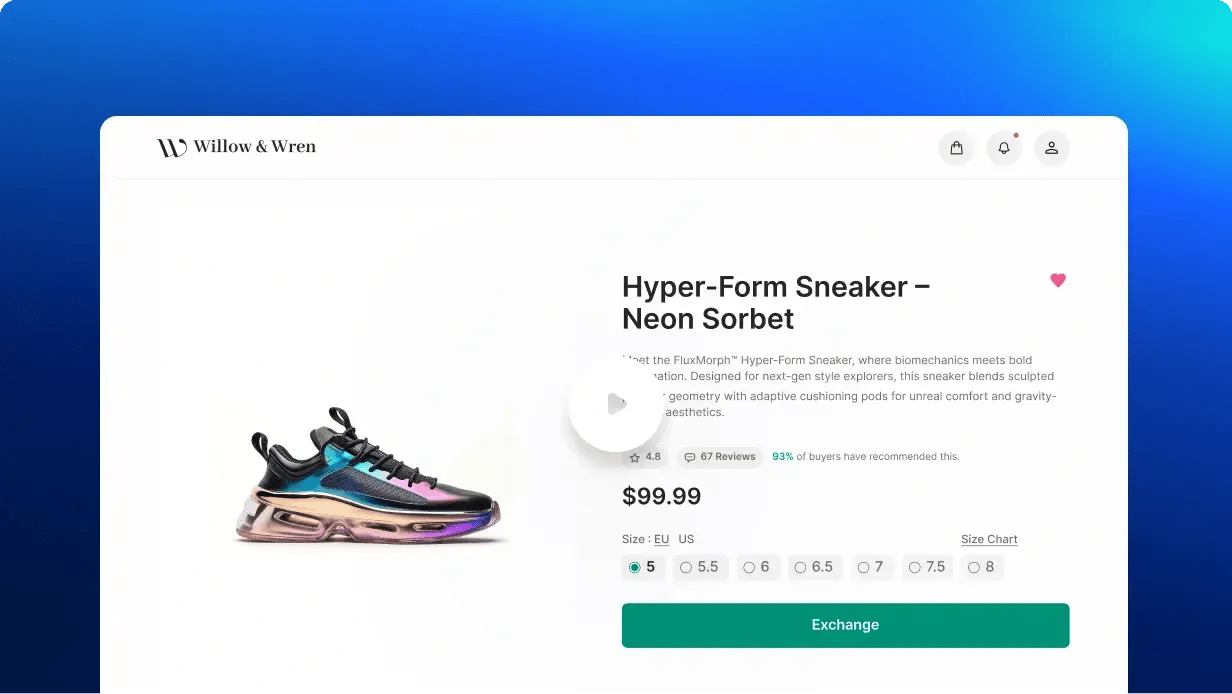
Exchange-first workflows route returning customers toward replacement products rather than refunds. These workflows convert a potential revenue loss into a retained customer and a new order. Retailers using exchange-first approaches consistently report lower net return rates and higher customer lifetime value. ClickPost's returns and exchanges platform supports exchange-first flow configuration at scale. You can also explore top returns management software options to find the right fit for your stack.
Use Proactive Post-Purchase Communication to Prevent Anxiety-Driven Returns
Customers who receive timely shipping updates and delivery confirmations are less likely to initiate uncertainty-driven returns. Strong post-purchase experience infrastructure reduces anxiety and builds the confidence to make repeat purchases that return policies alone cannot create. Reducing WISMO inquiries is one of the highest-ROI investments in post-purchase operations.
Leverage Returns Analytics to Identify Root Causes by SKU
Returns data is among the most actionable feedback available to a retailer. Consistent return patterns by SKU, size, or listing quality reveal opportunities to reduce return rates at the product level. Retailers with effective reverse logistics infrastructure and streamlined returns processes are better positioned to capture and act on this data. ClickPost's shipment-tracking tools provide the visibility needed to link delivery outcomes to return triggers.
The Future of Ecommerce Returns: Trends to Watch
Technology-assisted sizing: AR try-on tools and AI size recommendation engines are reducing sizing-driven returns in fashion and footwear, and adoption is accelerating.
Stricter return policies: More large retailers are introducing return fees and shorter windows as reverse logistics costs rise. Tiered policies — free exchanges and paid refunds — are becoming the norm.
Recommerce and resale integration: Returned items are increasingly routed into resale channels rather than restocked as new, reducing markdown risk on opened inventory.
Circular economy pressure: Regulatory and consumer scrutiny of returned goods waste is increasing. Retailers with transparent, responsible disposition practices will face less reputational exposure.
How ClickPost Helps E-commerce Brands Manage Returns and Reduce Costs
Returns management is one of the highest-leverage operational investments available to e-commerce retailers today. ClickPost provides the infrastructure to make that investment count.
Returns and Exchanges: Configure exchange-first return workflows that convert refund requests into new orders, protect revenue, and improve customer lifetime value.
Shipment Tracking: Deliver real-time, branded tracking experiences that reduce WISMO contacts and anxiety-driven return requests before they happen.
NDR Management: Automate non-delivery resolution workflows to reduce failed deliveries that generate avoidable returns.
Multi-Carrier Integrations: Connect with 500+ carriers to optimize inbound and outbound logistics across your returns network with multi-carrier software.
Post-Purchase Experience: Build the communication infrastructure that turns post-purchase anxiety into confidence in repeat purchases.
Book a demo to see how ClickPost helps leading ecommerce brands reduce return rates, recover more revenue from returned orders, and build post-purchase experiences that drive loyalty.
Conclusion: Turning Ecommerce Returns Into a Competitive Advantage
Returns are a structural feature of ecommerce, not an anomaly. The information gap between online listings and physical products means a share of purchases will always result in returns. The margin question is how well that process is managed.
High return rates compress margins, distort inventory planning, and erode customer relationships when handled poorly. Retailers that treat returns as a managed discipline — measuring cost-to-resell, enforcing exchange-first flows, and using returns data to improve content and supply decisions — consistently outperform those that treat returns as an unavoidable tax.
The post-purchase experience is the connective tissue between the first sale and the repeat purchase. Transparent tracking, proactive communication, and frictionless exchange workflows are customer-retention tools as much as cost-management tools.
Retailers investing in returns management software, reverse logistics infrastructure, and post-purchase experience are building a structural advantage that compounds as return volumes grow. When businesses design returns like a product — measured, iterated, and customer-aware — they protect margin and convert a significant operational challenge into a durable competitive edge.
Frequently Asked Questions About Online Product Returns
What products are returned most often when shopping online?
Fashion apparel, footwear, consumer electronics, furniture, and beauty products are among the most returned ecommerce categories. Sizing uncertainty, expectation mismatches, and product defects are the primary drivers across these segments.
Why do shoppers return products they bought online?
The most common reasons are incorrect sizing, products that do not match descriptions or photography, damaged or defective items, buyer's remorse, and deliberate over-ordering (bracketing). Sizing accounts for 40–50% of fashion returns specifically.
Which e-commerce category has the highest return rate in 2026?
Fashion and apparel consistently record the highest e-commerce return rates. Rates in this category frequently exceed 25% and can approach 40–50% in fast-fashion segments, driven by sizing inconsistency and the inability to try garments before purchase.
What is the average ecommerce return rate by category?
Average e-commerce return rates generally range from 15% to 30%, depending on category and market. Fashion and electronics trend toward the higher end; consumables and groceries trend toward the lower end. See our full breakdown of ecommerce return statistics for category-level data.
What is bracketing in e-commerce and why does it increase returns?
Bracketing is when shoppers intentionally order multiple sizes, colors, or variations of the same product to return unwanted options after selecting their preferred item. It is most common in fashion and footwear and is strongly associated with free return policies.
How do high ecommerce return rates affect retailer profitability?
Returns erode profitability across multiple dimensions: inbound shipping, inspection labor, repackaging, restocking, markdown risk, and in some cases, complete inventory write-offs. Bain & Company confirms that returns can compress retail margins by several percentage points. Understanding full logistics costs is essential for accurate margin modeling.
What is reverse logistics in e-commerce and how does it work?
Reverse logistics is the operational process of moving returned products from customers back to warehouses, processing facilities, or resale channels. It encompasses transportation, inspection, grading, repackaging, restocking, and final disposition of returned goods.
How can ecommerce brands reduce return rates effectively?
The most effective approaches include improving product content quality (better sizing guides, more accurate photography), implementing exchange-first return workflows, using proactive post-purchase communication, and leveraging returns analytics to identify root causes. Platforms like automated Shopify returns tools can streamline the process significantly.
Do free return policies increase ecommerce return rates?
Yes. Deloitte confirms that free return policies increase both conversion rates and return volumes. Free returns boost sales, normalize over-ordering, and reduce the friction associated with returning products.
What is ecommerce return fraud and how does it affect retailers?
Return fraud includes wardrobing (using and returning a product as new), counterfeit item returns, receipt fraud, component theft, and friendly fraud. NRF data confirms that return fraud is increasing globally, with e-commerce particularly vulnerable due to the absence of in-person verification. Retailers should consider ecommerce fraud prevention software as part of their returns strategy.